

Trust Doesn’t Have a Billing Code: Why Community-Based Maternal Care Works and What Gets in the Way
/by Meghan Hunt
Sofia,* a pregnant woman in Fresno, California, didn’t go to the doctor for seven months. Not because she didn’t know she needed care, but because she didn’t feel safe seeking it. Going to a clinic meant navigating a system she didn’t trust and, in early 2025—with immigration enforcement intensifying across the region—the risks felt too high.
Her story is not an anomaly. It is a predictable result of health systems that have, for generations, failed to serve certain communities well, or served them in ways that caused harm. In Fresno, like many places in the United States, Native American, Latino, and especially Black families face higher rates of maternal mortality, infant death, and pregnancy complications that can stem from dismissive treatment, cultural disconnection, and services built around assumptions that don’t reflect their lives.
How Community-Based Organizations Are Building Trusted Connections to Care
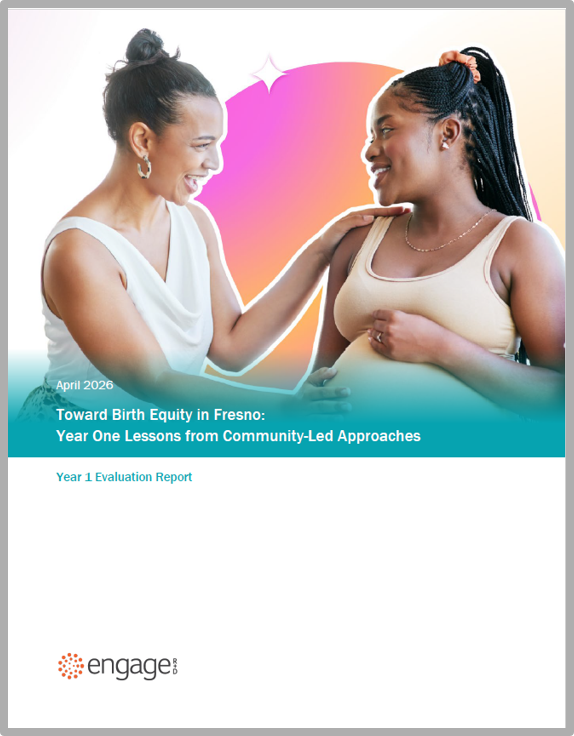
This health care gap is one that community-based organizations can help fill, and the premise behind a recent investment by the David and Lucile Packard Foundation’s Children and Families Initiative. Since 2024, the Packard Foundation has supported six Fresno-based organizations as they develop culturally responsive approaches to improving connections to maternal and child health and reducing disparities.
Through our evaluation, families working with these six organizations described the dynamic in different ways but with a common theme: they weren’t just looking for information or services, but someone they could trust at one of the most important and vulnerable times in their and their children’s lives. For families enrolled in the Fresno American Indian Health Project’s Family Spirit home visiting program, that trust was built through Health Educators who brought shared cultural knowledge alongside a health curriculum grounded in cultural traditions and practices. “The fact that it’s Native American based is what I really appreciated about it,” one participant told us. For Black birthing people attending the BLACK Wellness and Prosperity Center’s group prenatal sessions, it meant being in a room with a Black doula who understood their experience and seeing health materials that reflected their bodies for the first time. For Spanish- and Mixteco-speaking families tuning into Radio Bilingüe, it meant hearing health information from people who sounded like them, in their language, drawing on their values and traditions. “They are real stories,” one listener said, “and it’s clear the speakers are moms like us.” As one observer put it, these organizations weren’t just opening doors to health care, they were laying out the welcome mat that invited families to safely step over the threshold.
Trust Doesn’t Have a Billing Code
The paradox of this work is that the organizations best positioned to reach families are themselves navigating systems that don’t always reflect community experience. Take, for example, Medi-Cal. In 2023, California began covering doula services through the state’s Medicaid program, allowing families greater access to trusted advocates during pregnancy and birth. But receiving reimbursement for these services can entail introducing new electronic billing systems, waiting up to 90 days for repayment, and gaining buy-in from clinics and hospitals—infrastructure that can be difficult to set up for small, community-based organizations. These complications led one organization in the Fresno cohort to temporarily pause its doula training to focus internal resources on updating its billing systems. Another organization encountered a high rate of reimbursement denials for community health worker services, often due to the system rejecting patients with two last names, common in the Latino community. They and others were also impacted by federal funding cuts that eliminated $11 million in community health worker support in Fresno County. These challenges stem from a system that was built around large institutional providers, and not the small, community-rooted organizations that are often best positioned to serve families most affected by disparities.
What This Means for Funders and Policymakers
Sustaining community-based care requires a multi-pronged approach. Based on what we observed in Fresno, funders and policymakers can support efforts to reduce disparities in maternal and child health by:
Explicitly funding relationship-building. Building the sort of trust that truly supports families takes time and intentional investment. By recognizing relationship-building as a core program activity rather than program overhead, funders can support the trust that enables care.
Playing a bridging role to public funding. Connecting community-based services to public funding streams like Medi-Cal is rarely linear and never fast. Organizations need capital to sustain operations while building billing systems, resolving denials, and figuring out reimbursement processes. Private funders who commit to flexible, multi-year support can help organizations access public funding and become more sustainable.
Investing in the whole ecosystem. No single organization can meet the full range of needs families experience during pregnancy and early parenthood, or serve every population. Funders who think in portfolios — and who invest in the connections between organizations — are better positioned to support the kind of comprehensive, community-rooted care that makes a real difference.
Across the country, community-based organizations are doing similar work to reach families that formal systems often cannot and build the trust that makes care possible. What we are learning in Fresno about navigating the structural barriers to this work holds lessons for these efforts. We would love to hear from others working at this intersection: What are you seeing in your community and what are you learning about what it takes to make this work sustainable?
*Name changed to maintain confidentiality.
